Central Asia Culture
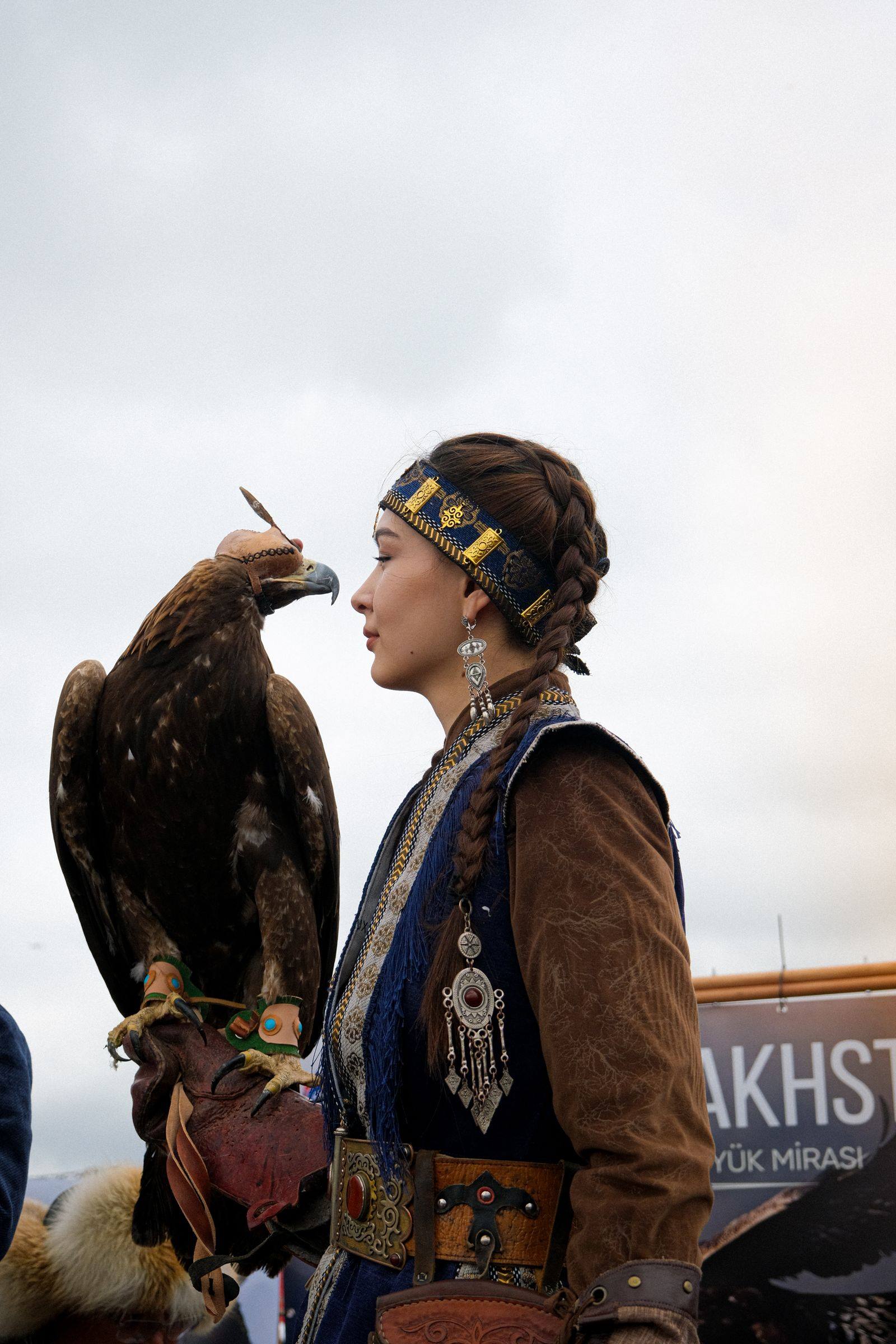
On a good morning in the mountains above Karakol, you might see a rider with a golden eagle on their arm, and it will not be staged for you. It will simply be someone going to work.
A Tradition, Not a Show
Berkutchi, eagle hunters, have worked with golden eagles across the Tian Shan and Altai ranges for centuries, training birds to hunt alongside them and releasing them back to the wild after years of partnership. It's real, working knowledge passed down through families in Kyrgyzstan, Kazakhstan and Mongolia alike, not a costume put on for visitors.
The name comes from berkut, the word for golden eagle in Kyrgyz and Kazakh. In the old nomadic world, an eagle could feed a family through the winter and provide fur for warm clothes. Today hunting matters less for survival, but the skill, and the pride in it, has stayed.
What Berkutchi Actually Do
Training a golden eagle takes years and starts with trust, not dominance: building a relationship with a bird that could, physically, leave any time it chose to. Hunters usually work with females, which are larger and stronger than males and can weigh six kilograms or more, with a wingspan over two meters.
Training starts with the hunter spending day and night near the bird so it gets used to their voice and presence. Over time the eagle learns to return to the arm and to hunt on command. Eagles hunt with their handler through the winter months, usually foxes and hares, and are typically released back to the wild after a decade or so, so the population stays wild rather than becoming a captive tradition.
"You're meeting someone practicing a skill their grandfather practiced, not performing folklore."
A Year in the Life of an Eagle Hunter
The rhythm of the work follows the seasons. In summer, the eagle rests and moults, and the family is busy with animals and pastures like any other herding household. Autumn is when training intensifies, as the bird is brought back into hunting condition and the hunter rebuilds its trust and fitness.
Winter is the hunting season. Snow makes tracks easy to read and the animals easier to spot against the white slopes, and fox fur is at its thickest. Hunters ride out on horseback before dawn, often working in pairs, with one rider driving game out of the gullies while the other releases the eagle from a ridge above. A good hunt can take a whole day in freezing wind for a single fox, and many days end with nothing at all.
The bird is carried on a thick leather glove, and the arm is supported by a wooden rest attached to the saddle, because holding six kilograms at arm's length for hours would be impossible otherwise. The eagle wears a leather hood that keeps it calm until the moment it's needed.
Spring brings the end of the season, and for an eagle that has served its years, release. Hunters often say this is the hardest part of the tradition, and also the most important.
How to Tell Real From Staged
Not every eagle you see in Kyrgyzstan is part of this tradition. Along busy tourist spots, including some beaches on Issyk-Kul, people charge for photos with tethered eagles that spend their days in the sun next to a parking lot. We'd skip those.
A real berkutchi lives with their bird, hunts with it in winter, and talks about it the way you'd talk about a working partner. Meeting one happens at their home, on their terms, not at a roadside stand.
Festivals and Competitions
Eagle hunting also lives on in festivals. In Kyrgyzstan, Salbuurun events bring together eagle hunters, archers on horseback and taigan hunting dogs. Eagle hunting has also been part of the World Nomad Games, which Kyrgyzstan hosted several times before Kazakhstan hosted them in 2024. Dates change every year, so if you want to time a trip around a festival, ask us when you apply.
How to Be a Good Guest
- Ask before taking photos of the hunter, their family or the bird.
- Don't approach or try to touch the eagle unless the hunter invites you. These are powerful wild animals.
- If you're offered the chance to hold the bird on a thick leather glove, follow every instruction exactly.
- Accept the tea. Visiting a berkutchi family is also a visit to their home.
Where You'll Meet One
Our Kyrgyzstan: The Celestial Mountains tour spends an evening with an eagle-hunting family near Karakol. There are no guarantees of a hunt, but it's the best chance most travelers will ever get to sit with a berkutchi and their bird.
Common Questions
What is a berkutchi?
A berkutchi is an eagle hunter in Kyrgyzstan or Kazakhstan, someone who trains and hunts with a golden eagle. The name comes from berkut, the local word for golden eagle.
Is eagle hunting ethical?
Traditional berkutchi build a long partnership with their bird and usually release it back to the wild after years of hunting. Tourist photo stands with tethered eagles are different, and we avoid them.
Can you see eagle hunting in Kyrgyzstan?
Yes. You can meet eagle-hunting families near Karakol, and eagle hunting is part of festivals like Salbuurun. Real hunts happen mostly in winter.
Can I hold the eagle?
Sometimes, if the hunter offers, using a thick leather glove and following their instructions. Never approach the bird without being invited.
Keep Reading
More From the Journal
Come See the Tian Shan.
Applications are read personally, by Dinara.