Hungary Travel
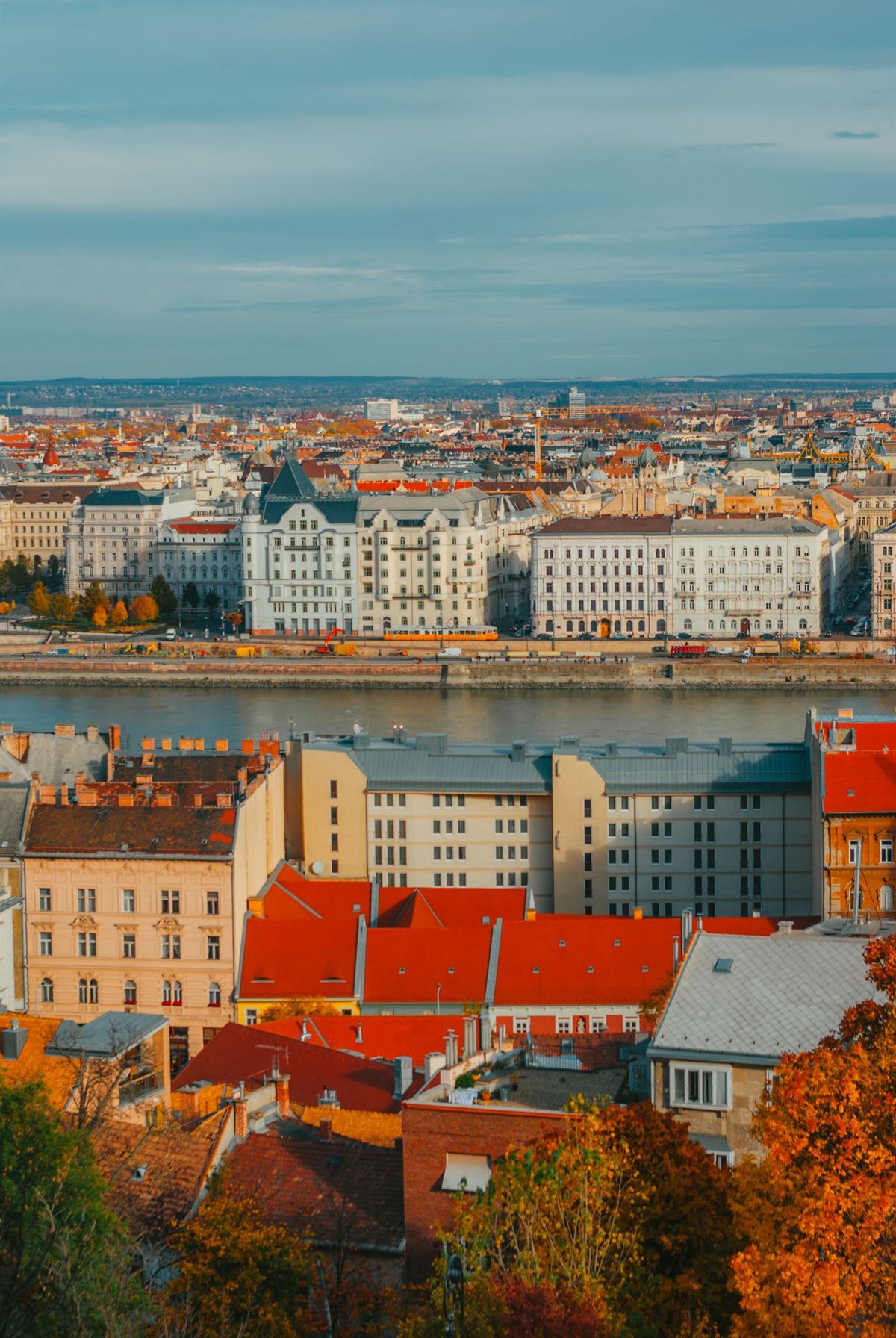
Everyone plans Budapest. Almost nobody plans what comes after Budapest, which is exactly the part of Hungary that makes the trip worth it. Here's how we'd sequence six days.
Buda and Pest Are Two Different Trips
Pest is where you walk: the parliament building, the ruin bars, the river promenade at night. Buda is where you climb: the castle district, Fisherman's Bastion, and the funicular up from the Chain Bridge. Give each side its own day rather than rushing both in one.
On the Pest side, don't miss the Great Market Hall for paprika, sausage and lángos, the fried flatbread Hungarians eat with sour cream and cheese. Walk Andrássy Avenue toward Heroes' Square, and come back to the river after dark, when the parliament is lit up and the whole city looks different.
On the Buda side, go up to the castle district early, before the tour groups, and walk the quiet back streets behind Matthias Church. For the best view in the city, climb Gellért Hill at sunset.
Choosing a Thermal Bath
Budapest sits on more than a hundred thermal springs, and bathing is part of daily life here, not just something for visitors.
- Széchenyi: the famous one, a huge yellow neo-baroque building with outdoor pools that steam in winter. It photographs beautifully, but it's also the most crowded.
- Rudas: an Ottoman-era bath on the Buda side, with an octagonal pool under a 16th-century dome. Smaller, older, and far less of a tourist scrum. Our honest recommendation if you only have time for one.
- Gellért: an Art Nouveau interior that looks like a palace. Check before you go, as it has had long renovation closures.
Bring flip-flops and a towel, or rent them at the entrance. Some lap pools require a swim cap, while the warm soaking pools don't.
"Rudas is smaller, older, and far less of a tourist scrum than Széchenyi."
Lake Balaton
Central Europe's largest lake is about two hours from Budapest and worth a full day. The south shore is flat, shallow and busy in summer. The north shore is where we go: volcanic hills covered in vineyards, small wine villages, and the Tihany peninsula, with its hilltop abbey and lavender fields that bloom in early summer.
The Badacsony hills on the north shore are known for white wines grown on old volcanic soil. A tasting here with a view over the water is one of the easiest good afternoons in Hungary.
Near the western end of the lake, Hévíz has one of the largest natural thermal lakes you can swim in. The water stays warm enough to bathe outdoors even in winter.
Eger: Wine Cellars and a Castle
Eger, northeast of Budapest, pairs a Baroque town center with wine cellars carved into a hillside, the Valley of the Beautiful Women, that you can walk between tasting by tasting. The local red is Egri Bikavér, or Bull's Blood, and every cellar has its own version.
The town also has a castle with a famous story: in 1552 its defenders held off a much larger Ottoman army, and Hungarians still learn about it in school. Near the town, the thermal baths at Egerszalók flow over a white limestone hill that looks like it's covered in snow.
What to Eat in Hungary
Hungarian cooking is built on paprika, and it's more varied than goulash. The real gulyás is a soup, not a stew, and pörkölt is the thicker dish most foreigners imagine when they hear the word. Try halászlé, a paprika fish soup that's especially good near rivers and lakes, and chicken paprikash with small dumplings called nokedli.
For a quick lunch, lángos from a market stall is hard to beat, and Budapest's cafés serve cakes that compete with Vienna's. Look for Dobos torte, with its layer of hard caramel on top, and Somlói galuska, a rich sponge dessert with chocolate sauce and cream. In winter, the Christmas markets sell kürtőskalács, chimney cake, baked on a spit and rolled in sugar and cinnamon.
Wine is a bigger part of Hungarian life than most visitors expect. Beyond Eger and Balaton, the Tokaj region in the northeast produces one of the world's oldest sweet wines. If you're in Budapest only, a good wine bar can pour you a tour of the whole country in an evening.
Practical Notes
Hungary uses the forint, not the euro. Cards work almost everywhere in Budapest, but carry some cash for wine cellars, markets and smaller towns. Trains to Balaton and Eger are comfortable, but having a driver makes it much easier to combine the north shore wineries in one day.
When to Go
Late spring and early autumn keep Budapest's streets walkable and Balaton's shoreline uncrowded. September adds the grape harvest. The baths are wonderful any time of year, and arguably best in winter. Our Hungary tour runs whenever suits you, built around exactly this route.
Common Questions
How many days do you need in Budapest?
Three is a good minimum: one for Pest, one for Buda, and one for a thermal bath and anything you missed. Add two or three more for Lake Balaton and Eger.
Which Budapest thermal bath is best?
Széchenyi is the most famous and the busiest. Rudas, an Ottoman-era bath on the Buda side, is smaller and quieter, and our pick if you only visit one.
Can you swim in Lake Balaton?
Yes, from about June to September. The water is shallow and warms quickly, especially on the south shore. Hévíz thermal lake nearby is warm enough to swim in all year.
Does Hungary use the euro?
No, the currency is the Hungarian forint. Cards are widely accepted, but carry some cash for markets, wine cellars and small towns.
Keep Reading
More From the Journal
Ready for Hungary?
Applications are read personally, by Dinara.