Romania Travel
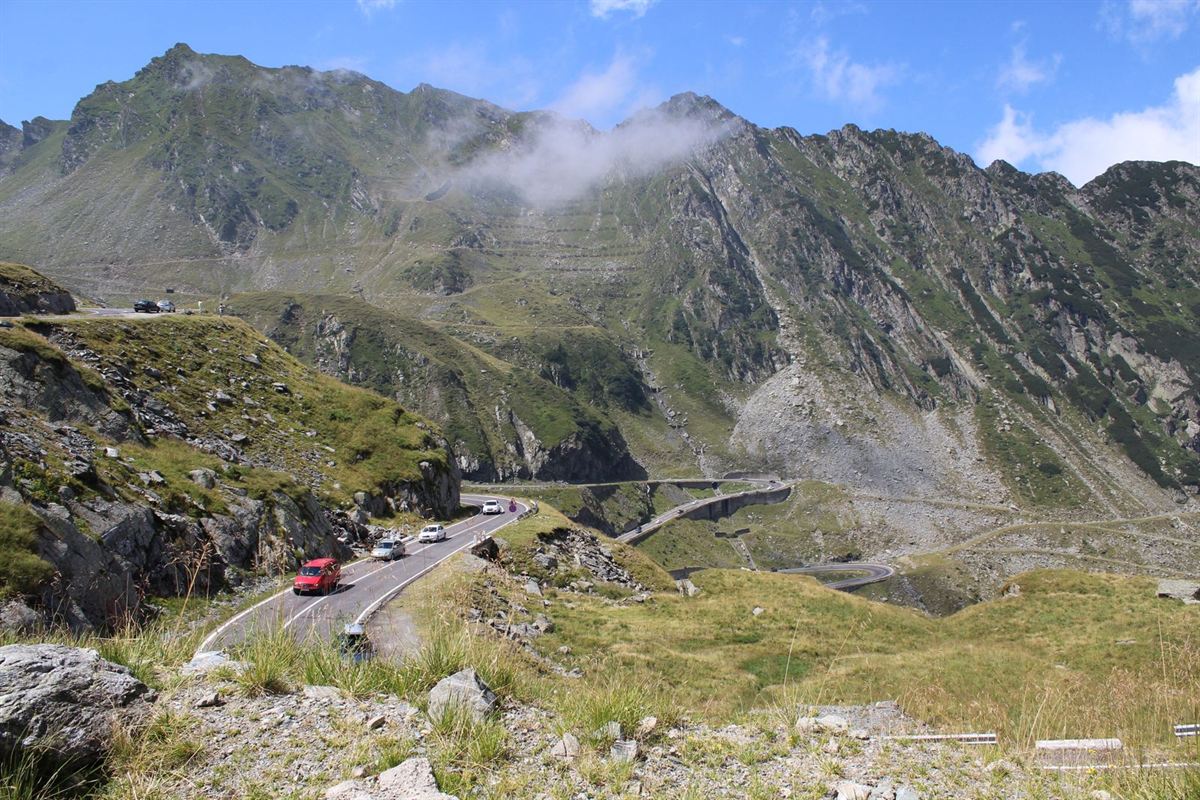
Top Gear called it the best road in the world, and Romanians will tell you that's not even an exaggeration. Here's what the show doesn't cover: when to actually go, and what to build around it.
What the Transfăgărășan Is
The Transfăgărășan is a mountain road that crosses the Făgăraș range, the highest part of the Romanian Carpathians, linking Wallachia in the south with Transylvania in the north. It was built in the early 1970s, largely for military reasons, and climbs to just over 2,000 meters at its highest point near Bâlea Lake.
The mountain section is roughly 90 km of switchbacks, tunnels and viaducts. The northern side, with its stack of hairpins climbing out of the valley, is the view you've seen in every photo.
When It's Even Open
The Transfăgărășan closes with the first serious snow, usually late October, and doesn't fully reopen until late June some years. The usual season for the high section is July through October. If your dates are flexible, July through mid-September is the safe window.
Mid-morning starts avoid both the fog that sits in the valley at dawn and the traffic that builds by early afternoon, especially on summer weekends.
Where to Actually Stop
- Vidraru Dam: on the southern approach, a huge arched dam with a lake behind it. Walk out along the top for the drop on one side and the water on the other.
- Poenari Castle: the real fortress associated with Vlad the Impaler, on a crag above the road, with none of Bran Castle's gift-shop crowds. Getting up means about 1,480 steps, so budget an hour for the climb alone.
- Bâlea Lake: the glacial lake at the top, and worth it. Have lunch at one of the huts and walk a little way along the ridge if the weather is clear.
- Bâlea waterfall: on the northern side, a cable car runs from near the waterfall up to the lake, an alternative if the road is busy.
"The road itself is a half-day, which is exactly why most visitors waste it as a single detour from Bucharest."
Bears on the Road
You will very likely see brown bears near the southern section, sometimes sitting right at the roadside waiting for food. Don't feed them, don't get out of the car to photograph them, and keep your windows up. Feeding has made some of these bears dangerously comfortable around people.
Transfăgărășan or Transalpina?
Romania has a second famous mountain road, the Transalpina, a little further west. It's actually higher, at around 2,100 meters, and usually quieter, with wide-open ridgeline views rather than tight hairpins. If you have time for both, drive both. If only one, the Transfăgărășan is the more dramatic, the Transalpina the more peaceful.
Building It Into a Real Trip
The road itself is a half-day, which is exactly why most visitors waste it as a single detour from Bucharest, about four hours each way. We treat it as the spine of a longer route instead: Bucharest's old town, then north into the mountains, then Transylvania.
On the Transylvanian side, Sibiu is a beautiful old town with houses whose roof windows look like watching eyes. Around it are the fortified Saxon churches, like Biertan, a UNESCO site. Brașov's medieval square sits beneath Tâmpa mountain, and Peleș and Bran castles are both an easy drive away. That's the shape of our Romania tour.
Driving It Yourself
If you rent a car, a few things make the day much easier. Start with a full tank, since there are no fuel stations on the mountain section. Allow at least four hours to cross from one side to the other with stops, and more if you want to walk at Bâlea Lake or climb to Poenari Castle. Use a low gear on the descent rather than riding the brakes.
Expect slow traffic on summer weekends, when the road fills with Romanian families, motorbikes and cyclists. On a weekday morning in early July or September, you might have long stretches almost to yourself. The tunnel at the top is unlit in places, so turn your headlights on before you enter.
Weather is the other thing to plan around. It can be sunny in the valley and thick fog at the lake, or the other way round. If the top is clouded in when you arrive, wait an hour at the huts with a coffee. The cloud often lifts as quickly as it came.
What to Eat Along the Way
The huts at Bâlea Lake serve simple mountain food: ciorbă, a sour soup, grilled sausages called mici, and polenta with cheese and sour cream. Small stalls along the southern approach sell smoked cheese and honey from local farms. In Transylvania, look for papanași, fried doughnuts with sour cream and jam, which make a fine reward for a day of hairpins.
One Honest Warning
The hairpins are as sharp as they look on video, and some of the older sections have no guardrail. Weather at the top can change within an hour. It's a road to be driven carefully and photographed often, not rushed.
Common Questions
When is the Transfăgărășan open?
The high section usually opens around the start of July and closes with the first heavy snow, typically late October. July to mid-September is the most reliable window.
Can you do the Transfăgărășan as a day trip from Bucharest?
You can, but it's about four hours each way before you even start the mountain section. It works much better as part of a route that continues into Transylvania.
Are there bears on the Transfăgărășan?
Yes, brown bears are often seen near the southern section. Never feed them, stay in the car, and keep windows closed.
Is the Transfăgărășan or the Transalpina better?
The Transfăgărășan has the famous hairpins and more drama. The Transalpina is slightly higher, quieter and more open. Both are worth driving if you have time.

Ready for Romania?
Applications are read personally, by Dinara.